For decades, the measure of success in the agency world was purely physical. How many square feet is your shiny city centre office? How many staff do you have? How much cool stuff do you have? – fridge full of retro drinks, table tennis table, pool table, bar in the corner etc etc.
When I first started out as a business there was tremendous pressure to “scale up”—to hire full-time staff for every conceivable role and sign long-term leases on impressive, classy offices to ‘look the part of being an agency’.
I am beyond glad I did not go down that route as I think my business would not have lasted a few months let alone the 5 years I’ve actually been going.
But for me the digital landscape has shifted drastically. The bloated, brick-and-mortar agency model is becoming a dinosaur, struggling to keep pace with a market that demands speed, hyper-specialization, and relentless ROI. Particularly with the advent of AI coming into play.
Here is why staying small and distributed isn’t just a lifestyle choice—it’s a superior business strategy – my opinion.
1. The cool office expense
The traditional agency model is expensive. Before a single piece of client work gets done, a massive chunk of revenue must cover rent, utilities, insurance, office snacks, ergonomic chairs, and commuting costs.
Clients are increasingly savvy. They realize that when they hire a big, flashy agency, a significant percentage of their retainer isn’t going towards talented strategists; it’s going towards paying the landlord of that flashy office.
The Remote Advantage: A remote, small agency reinvests that overhead back into the business. They can afford better tools, pay their core team better, and, crucially, offer more competitive pricing to clients while maintaining higher profit margins. When you remove geographical constraints, you remove the shackles of expensive cool offices.
2. The early stages of an agency and the staffing issue
In a traditional agency trying to scale with full-time staff, you face the “unicorn” problem. You need an SEO specialist, but you also need them to handle some paid ads, write a few blogs, and maybe do basic graphic design because you can’t afford a full-time expert for each role yet.
The result? You hire generalists. They are okay at several things, but masters of none. Furthermore, full-time staff have ebb and flow in their workload. You are paying them the same salary whether they are actively crushing a campaign or scrolling TikTok waiting for the next brief.
The Freelancer Solution: Digital marketing is now too fragmented for generalists. You need deep expertise in TikTok ads, technical SEO, email automation, or specific copywriting niches.
By utilizing a network of freelancers, a small agency doesn’t hire “okay” employees; they partner with top-tier specialists for exact needs. You assemble the perfect “Avengers level super heroes” team for a specific client project, and then disband them when the job is done. You pay for expert execution, not for downtime.
In addition they are not actual employees so they look after their own pensions, tax etc etc. This alone was a game changer for me as that additional cost and time in administration was amazing when first getting started.
3. Agility and scalability being small
The biggest enemy of the large agency is inertia. Trying to pivot a 100-person, office-based team towards a new trend (like suddenly integrating AI workflows) is like turning an oil tanker. It takes months of meetings, approvals, and restructuring.
A small, remote agency is a speedboat. If a client needs to scale up their ad spend 500% for Black Friday, the agency taps three more trusted PPC freelancers from their network. If a client pauses services, the agency scales down instantly without messy layoffs or carrying unnecessary payroll.
This agility allows small agencies to adapt to market changes faster than their bloated competitors, keeping them on the cutting edge.
4. No HR here – not needed
We cannot ignore the human element. The traditional agency grind—long commutes, mandatory desk hours, and intense office politics— can lead to higher burnout and turnover. Plus potentially the dreaded middle manager role might have to come into play which can open a whole can of HR issues across the organisation.
Remote work, when done right, focuses on output, not hours in a chair. This attracts a different caliber of talent. It attracts self-starters and mature professionals who value autonomy.
Furthermore, top freelance talent often chooses freelance life because they are so good they don’t need a boss. By tapping into this network, a small agency gets access to senior-level strategy that would cost a fortune to hire in-house.
My personal experience and why I am remaining small
Ultimately if you are wanting to start an agency or business then you have a choice. Do you want the ‘cool office and branding’ (nothing wrong with that)? But be aware that your starting costs and stress will be through the roof. Some people strive from this and live for this lifestyle – I wish you the best of luck.
For me personally it was about ensuring steady consistent growth by building great freelance and client relationships. Yes, I do have a physical office which I do work from. Unfortunately it’s not that ‘cool’ and there is no table tennis table, but I do have a good little coffee machine for the daily espressos and it suits me and my business perfectly.
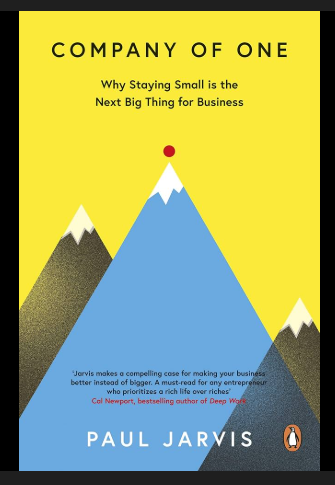
Last and final note – one business book which had a big impact on my thinking when running my business is Company of one by Paul Jarvis. If you are unsure of what way you want to build your business or simply looking for another good business book I can highly suggest you give this a read – it’s a small book so if your a strong reader you could get through it in a day.